2027 Hyundai Tucson XRT Breaks Cover Trying To Look Tough
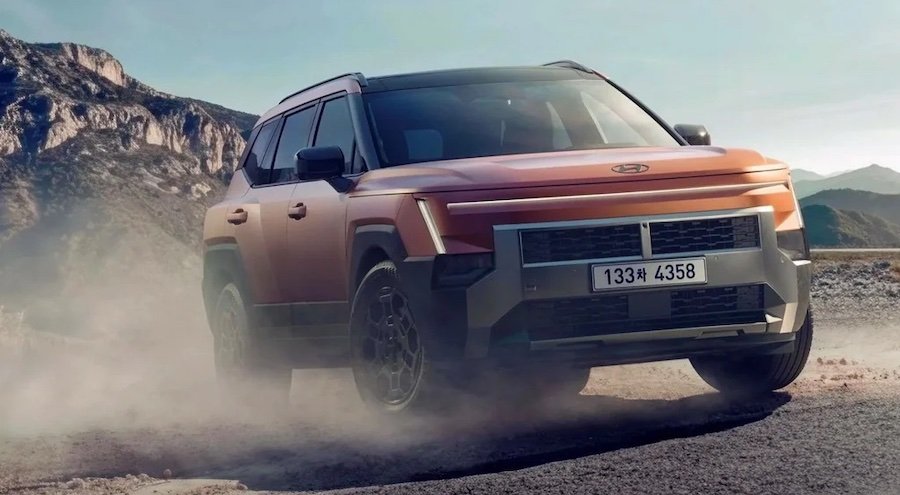
When Hyundai revealed the new Tucson about a month ago, it also shared an appetizer for the XRT by previewing the rugged version in a single official image. Now, the more adventurous side of the fifth-generation compact crossover is being revealed in full, and predictably, it’s a lot to take in. It builds on the regular model’s complete design overhaul and adds a sprinkle of chunky styling accents to emphasize its outdoorsy nature.
Up front, the XRT stands out thanks to a split rectangular grille that looks considerably more imposing than the unit fitted to the regular Tucson. The chunky skid plate underneath reinforces the off-road-inspired theme, while the black wheel-arch trim gives the SUV a more substantial visual footprint. The black wheels skip the Hyundai logo for XRT lettering.
The cladding isn't completely plain, either. Hyundai says it features a pattern inspired by forged carbon, adding some visual interest to what would otherwise be a fairly predictable black plastic treatment. Move around back, and there’s another XRT-specific bumper and skid plate. The tailgate gets an XRT badge, along with the HTRAC logo denoting standard all-wheel drive.
XRT Upgrades Continue Inside
Hyundai has also installed protective floor mats for both rows, suggesting the company expects some XRT buyers actually to get their SUVs dirty. Rounding out the tweaks are XRT-exclusive patterned seats and dark-metal trim. It's not a complete interior makeover, but the darker treatment fits the exterior's more rugged character.
And that's really what the XRT is about. Hyundai hasn't presented it as a hardcore rock-crawling machine. Instead, it's a tougher-looking version of the Tucson aimed at buyers who want the idea of an adventure-ready SUV without necessarily going full mud-plugger.
That distinction matters because the regular Tucson has already undergone a pretty dramatic transformation for its fifth generation. The new SUV is 60 millimeters (2.4 inches) longer, 40 mm (1.6 in) wider, and rides on a wheelbase stretched by 30 mm (1.2 in). Hyundai also increased rear-seat headroom by 29 mm (1.1 in) and widened the rear-door opening from 73 to 83 degrees.
Boxy Yet Slippery
Even though it looks boxier than ever, the new Tucson is the most aerodynamically efficient to date, with its drag coefficient dropping from 0.33 to 0.30. Active air flaps, aero-optimized wheels, and a resculpted roof spoiler help the crossover glide through the air more easily than before. There’s also additional sealing material to minimize air leakage, along with a newly installed rear underbody spoiler.
Speaking of changes you can’t see, the dashboard now has extra noise insulation to keep engine noise out of the cabin. On the same note, the front door glass is thicker than before to reduce wind noise at higher speeds. The engine and transmission mounts have been revised to cut vibrations, while new suspension tuning reduces unnecessary body movement.
The new Tucson goes on sale next month in Korea, with pricing to be announced in October. Meanwhile, details about the gas engine and hybrid powertrain have already been announced.
