870 Miles Without Refueling? Renault Bets On Range-Extending EVs
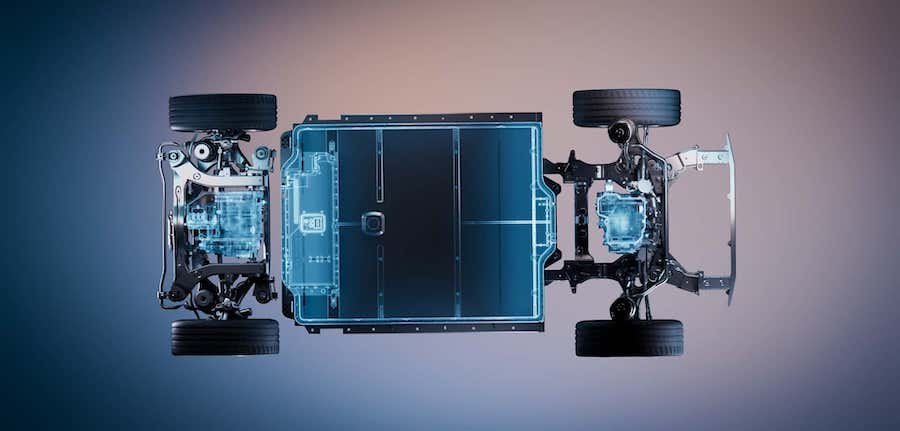
Renault’s ally Nissan has been selling range extenders for a decade, but the French brand has so far steered clear of using combustion engines as generators to charge the battery. However, that’s about to change. It’s working on a new platform intended for compact and midsize models, engineered primarily as EVs but with support for a small engine to boost overall range significantly.
The RGEV Medium 2.0 electric platform calls for EVs with a maximum electric range of 466 miles (750 kilometers) in the WLTP cycle. An equivalent model fitted with a range extender is claimed to cover up to 870 miles (1,400 kilometers) without refueling. Renault quotes emissions of under 25 grams per 62 miles (100 kilometers), which would enable the company to meet increasingly stringent regulations across Europe.
The platform’s modularity will make range extenders possible across multiple body styles, including sedans and SUVs. Interestingly, Renault even mentions minivans, which might be a subtle hint that the people mover could return one day after the Espace was turned into an SUV. The R-Space Lab concept could potentially preview the minivan’s comeback.
Future models built on the next-generation platform will also come in 4x4 flavors with a towing capacity of up to two metric tons. All of them will have something in common: ultra-fast charging courtesy of an 800V electrical architecture. Renault says models arriving in Europe from 2028 will be capable of adding significant range in just 10 minutes of charging.
Ideally, the company wants to slash development costs by up to 40 percent. Work is already underway in France on products that will cover the C and D segments, which currently account for 30 percent of the brand’s sales. The new arrivals are part of a “second wave of vehicles” that will also include next-generation hybrids.
For 2030, Renault has set an ambitious target. It wants all cars sold in Europe to be either hybrids or EVs, aiming for a fully electrified lineup in just four years.
