BMW Hits Nine Million Cars, The Milestone Is A Velvet Orchid iX1
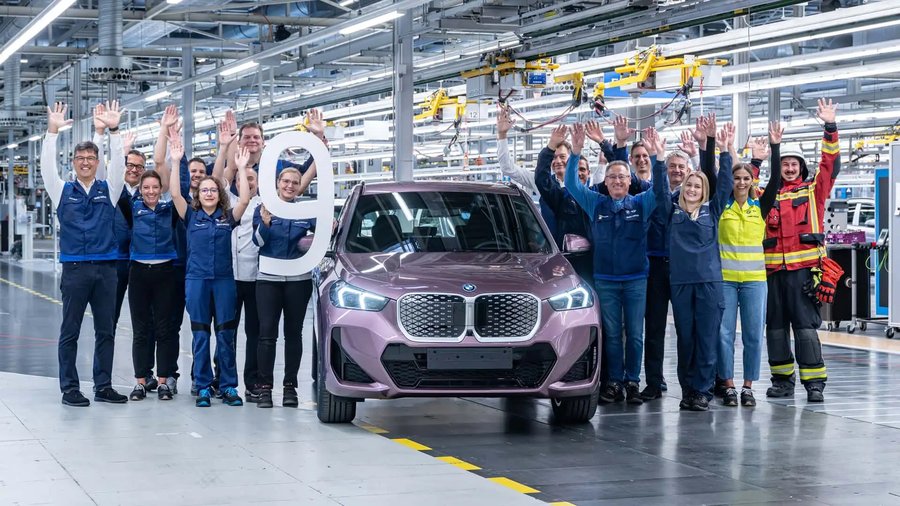
BMW's Regensburg plant has built nine million cars since 1986, and the one that tipped the counter over is an iX1 painted in a shade you will not see twice in a parking lot: Velvet Orchid II Metallic.
The electric crossover was built to a Swedish customer's own specification, and BMW timed the milestone to land in the plant's 40th year of production. That is not a coincidence BMW left to chance.
BMW's Nine-Millionth Regensburg-Built Model
Regensburg started building cars in 1986 with the E30 3 Series. BMW's agreement with the city then called for 400 cars a day and 3,500 jobs. In 2025 the plant ran three shifts. BMW said a new vehicle was completed about every 57 seconds.
That 2025 pace confirmed Regensburg as BMW's highest-volume factory in Europe, with roughly 356,000 vehicles shipped worldwide that year. Around 9,000 people now work across the Regensburg and Wackersdorf sites, building on a workforce commitment that started far smaller.
The plant's current lineup centers on the X1 and X2 crossover models. Gasoline, plug-in hybrid and fully electric versions all run down the same line. That flexibility let BMW build more than 150,000 electrified vehicles at Regensburg in 2025 without disrupting output of combustion models.
Over four decades the 3 Series has quietly done much of the heavy lifting at the plant, but its exact share of the nine million total is not broken down. BMW instead highlights that Regensburg passed 8.7 million vehicles built by the end of 2025, then reached the 9,000,000 mark in September 2026 in its 40th year of operation.
The Velvet Orchid II Metallic BMW iX1
Velvet Orchid II Metallic belongs to BMW's Individual paint program, the option that lets buyers step outside the standard color chart for something closer to a one-off. As BMW put it, that shade is not the sort of paint color that disappears into a dealer's parking lot.
Ordering a custom finish through BMW Individual means the car gets built to that Swedish buyer's own specification rather than pulled from standard stock. That is what happened with this iX1.
BMW describes the nine-millionth car as more about what it stands for than its sheet metal. The automaker uses it as proof of a production system that can switch between powertrains without slowing down, and of its push toward front-wheel-drive-based crossovers.
That push mirrors a broader shift already playing out across BMW's lineup, from the shrinking future of gas-only SUVs to electric-first architecture arriving on new BMW models. Regensburg's ability to build all of it on one line, without a dedicated EV plant, is the real story behind the orchid-colored paint job.
