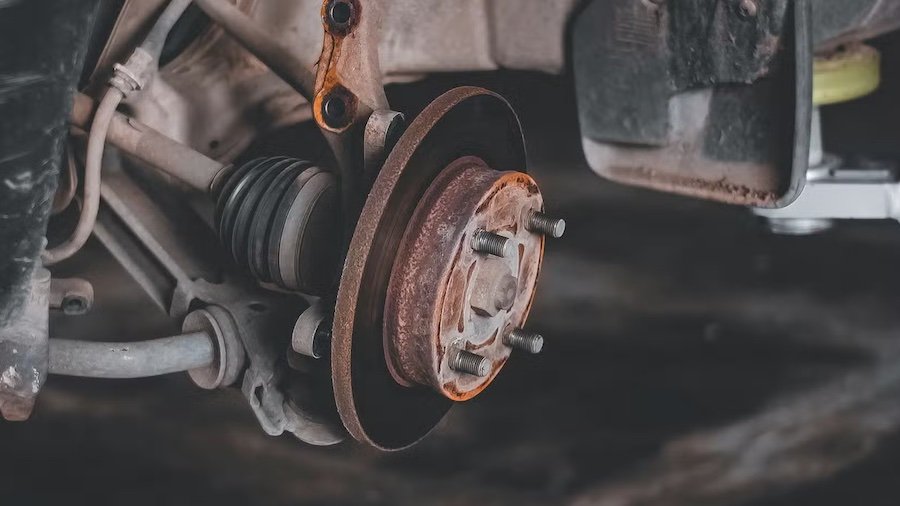
BMW has an idea - per a patent filing with the German Patent and Trade Mark office - that could see the worn rotors from your track-day M3 Sedan brought back to life, though.
The idea isn't just a simple turn on a lathe, it's a new layer of metal that might actually make old rotors better than they were when they left the factory the first time.
The auto industry is working harder to improve sustainability than almost any other sector. It's probably because cars are so common and so prominent, but it also shows that the industry can come up with incredible solutions. From recycled materials to lowered emissions, there is a lot of high tech. This latest patent might be one of the most interesting.
When iron brake rotors get rusty or start to wear unevenly, there's an almost 100% chance they're going to get thrown in the trash. Some might get a resurfacing or skimming, where they're cut down and made flat again on a lathe, but these days it's tough to find a shop to do it, and once it's done, the rotors become less capable of resisting warping under heavy braking. Sure the iron can be re-cast, but that's not as eco-friendly as reuse.
Enter this patent from BMW to reprocess the brakes. The first steps are simple. The rotors get sorted by size/part number and then they're inspected. If they're defective or unsalvagable, they get thrown in the recycling. The good rotors get cleaned up to remove rust, and then sent off to get a new coating. You can't add more iron to the disc, but you can add a new friction layer.
It's Like Paint, But Better
In the patent, BMW suggests adding titanium carbide, silicon carbide, or tungsten carbide. All of them are extremely hard materials that are used for things like machine tools. They're also capable of handling extreme temperatures. Making a disc out of them wouldn't work, but the materials are perfect for a coating layer.
Adding a coating of tungsten carbide works so well that Porsche uses it on some of its upgraded brakes already. Porsche Surface Coated Brakes don't surface rust, they offer less brake dust, they last longer, and they are more resistant to fade. BMW's resurfacing should deliver the same result.
The new layer is added in a process that's a lot like painting. Cold gas spraying or laser deposition are both options. The former applies the carbide like a powder coat through nitrogen or helium gas accelerated to supersonic speeds. The particles hit the metal with so much energy that they melt into the layer. Laser deposition uses a beam to melt and apply the carbide layer.There are some more complicated steps in the process. Before applying a new layer, the current thickness of the part would need to be measured to add the right amount to hit spec.
Fixes like this could be crucial for automakers when the Euro 7 emissions standards come into effect. The latest standards even cover the emissions from your brakes, and this disc could help keep vehicles compliant as they age. Even better for owners of older vehicles, any used brake disc could be reprocessed. If you've got a car where the brakes are unobtanium, you could not only get a like-new rotor, you could get one better than new that also meets modern emissions standards just by sending in your used brakes.
Related News
