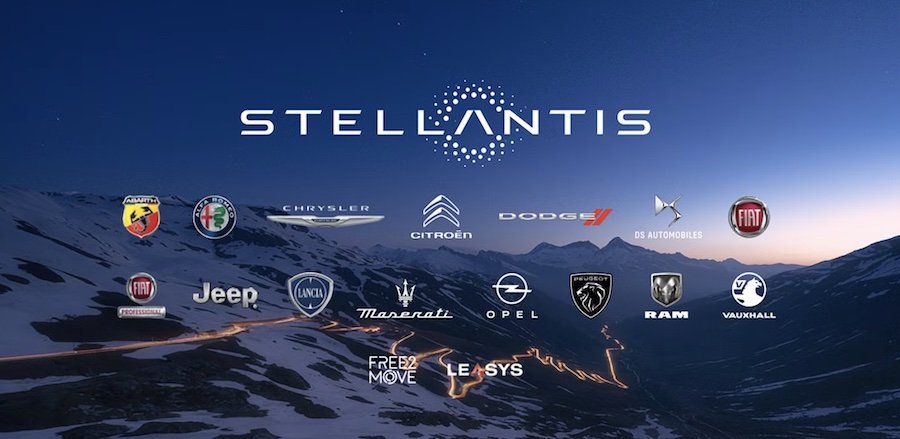
The multinational automaker now identifies four "global brands" that will receive 70% of future investments: Jeep, Ram, Peugeot, and Fiat, along with the Pro One business unit. That leaves five "regional brands," namely Chrysler, Dodge, Citroën, Opel, and Alfa Romeo, while "specialty brands" will include DS and Lancia, which will be managed by both Citroën and Fiat. British brand Vauxhall will continue operating within Opel. In the new brand structure, Maserati will stand alone as "pure luxury" and will receive two new E-segment (large) cars, to be unveiled in December in Modena. These will follow a new concept expected to debut in October.
"Every brand in Stellantis will play a clear role in delivering our FaSTLAne 2030 commitments," said Stellantis CEO Antonio Filosa.
"With the customer at the center of everything we do, the plan will deliver our purpose – to move people with brands and products they love and trust."
A Lifeline For American Brands
While the future of Dodge and Chrysler in the US has been in question with a depleted product roster, it appears Stellantis is not planning to shut them down. The automaker called all five regional brands "very strong in their respective markets" and said they will "benefit from these same global assets and increase brand distinctiveness to delight their customers."
By 2030, Stellantis plans to launch more than 60 new vehicles and 50 significant refreshes, across all brands and "powertrain energies," including 29 battery-electric vehicles, 15 plug-in hybrid or extended-range electric vehicles, 24 hybrids, and 39 internal-combustion/mild hybrids.
On the money front, Stellantis said it will invest €24 billion/$27.8 billion (40% of total R&D and capital expenditure investment during the period) in global platforms, powertrains, and new technologies.
Confirmed Models From American Stellantis Brands
Subsequent to the broader Stellantis group information, CarBuzz was among media shown a slew of new models planned for launch in the US before 2030. At least nine new models are coming, with several to get performance variants from SRT. Chrysler, which has been stuck selling minivans since the demise of the 300 sedan, will see a major injection with three new models, all below the $40,000 starting price mark. Ram, meanwhile, will establish itself as a true truck manufacturer with entries in the compact and midsize segments, plus a full-size body-on-frame SUV.
Dodge will get a new midsize muscle model reviving the GLH moniker, as well as a halo model called the SRT Copperhead, which will slot in halfway between a Challenger and a Viper in identity. Jeep, meanwhile, will see the addition of the Wrangler Scrambler, a single-cab, roofless version of the Gladiator truck. The full list of known vehicles for these brands is:
- Chrysler Airflow
- Chrysler Arrow
- Chrysler Arrow Cross
- Dodge GLH (incl. SRT variant)
- Dodge SRT Copperhead
- Jeep Wrangler Scrambler (incl. SRT variant)
- Ram Rampage
- Ram Dakota (incl. SRT variant)
- Ram Ramcharger (incl. SRT variant)
Three Platforms To Dominate Product Lineup
Technology "made for humans" is at the heart of FaSTLAne 2030, with a guiding principle: "Technology only matters if it improves everyday life for real customers. No technology for the sake of it." The company plans to introduce artificial intelligence as a global technology developed in collaboration with first-tier partners, then filtered out locally to brands and products in each region.
The technology groups are:
- STLA Brain, the scalable central compute and software architecture.
- STLA SmartCockpit, to define a new way for customers to interact with their vehicles.
- STLA AutoDrive, which will be Stellantis's scalable autonomous driving system.
All three are expected to launch in 2027.
On the platform front, Stellantis said 50% of global annual volumes will be produced on three global platforms by 2030, including the all-new modular STLA One, which is designed to maximize commonality and competitiveness. The automaker said it will continue to emphasize "freedom of choice" when it comes to powertrains. By 2030, nearly 50% of global annual volumes will be equipped with multi-regional powertrain solutions, with built-in energy flexibility.
Factory Cuts, But American Workforce Safe
Improving manufacturing efficiency is a priority. There's no talk of plant downsizing in the US, where increased production is expected to improve capacity utilization from 60% to 80% by 2030. American plants may even see production for other brands, namely those from JLR, following a recent announcement of plans for the two conglomerates to work together.
But in Europe, Stellantis plans to reduce capacity by more than 800,000 units, repurposing plants (such as Poissy, France) and leveraging partnerships (such as in Madrid and Zaragoza in Spain and in Rennes, France), while aiming to preserve manufacturing jobs. Capacity utilization at the European plants is expected to climb from 60% to 80% in 2030.
