Manufacturers are exploring ideas from the tech world to generate more consistent revenue streams beyond the initial purchase, most notably through subscription plans for specific features. BMW attempted them, rather hamfistedly, a few years ago with features like Apple CarPlay and heated seats.
And it looks like another German brand, Volkswagen, may be implementing subscription plans as well – this time for power.
The feature mentioned in this article applies to VWs sold in the United Kingdom. Volkswagen of America did not respond to a CarBuzz inquiry about whether there were plans to implement a similar power subscription plan on any of its American vehicles.
Volkswagen Wants To Charge Buyers A Subscription For More Horsepower
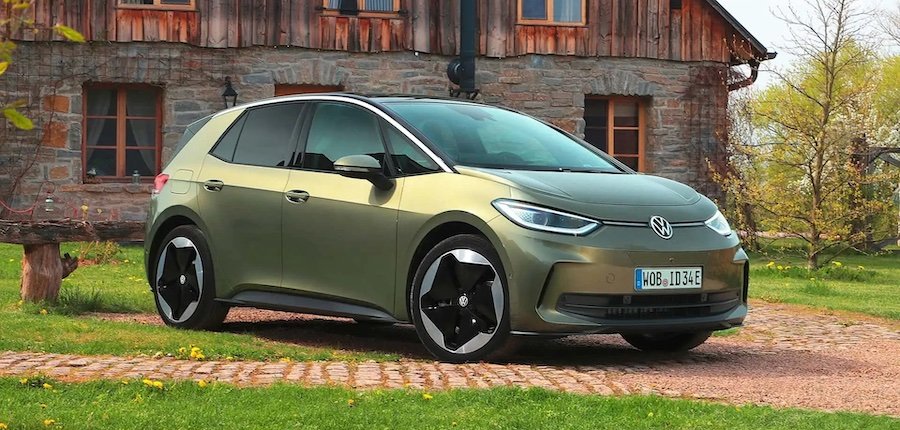
Volkswagen has not enacted subscription power plans on any American vehicle. But AutoExpress reports that VW has started offering extra power via a subscription plan on the ID.3 Pro and Pro S electric cars in Britain. The base model offers 198 horsepower. VW is selling subscription plans to level that up to 225 hp. After a free trial month, buyers can add the extra power for $22.30 per month (via the current exchange rate) or $223 for a full year. Buyers can also pay the equivalent of $877 to buy the extra power permanently.
This VW plan is similar (albeit much cheaper) to subscription acceleration upgrades introduced by Mercedes on its EQ electric models. Under that plan, EQE 350 4Matic sedan buyers, for instance, could pay $60 per month or $600 per year for an additional 60 hp, which dropped the car's 0 to 60 mph time from 6.0 seconds to 5.1 seconds. The plan also stipulated that buyers could purchase the additional power outright for $1,950. Similar plans for the EQS models added 80 hp for $90 per month or $900 per year.
Vehicle Subscription Plans Could Make Sense, In Theory
Subscription plans appeal to automakers. They provide additional, consistent revenue streams after the point of purchase. They can potentially allow companies to save costs by offering different variations of vehicles without adding production complexity. And in theory, subscriptions could work out for buyers too. New car buyers often pay for features they seldom use. A subscription plan could give buyers the flexibility to add features seasonally (such as a cold-weather package) or rent features for one-off use cases (extra horsepower for a track day, or rent GM Super Cruise and extra range for a road trip). And that could, in theory, save buyers money.
However, subscription plans aren't a business model that buyers particularly like in the tech industry. Manufacturers need to convince buyers by adding value or flexibility for the extra fee. One could argue that BMW's subscription failure was not the subscription plan itself, but rather, how the brand used it. Charging for CarPlay rankled owners because it was a service that had previously been free, cost little to implement, and was offered for free in many less expensive cars. In short, BMW was trying to create a revenue stream without providing any additional value for the consumer.
